

Stress is not a negative thing in itself: in the past, the stress response helped people to react with lightning speed in dangerous situations. The autonomic nervous system controls this change:
Sympathetic nervous system (stress system): Activates adrenaline and cortisol → heart rate and breathing increase, muscles tense, energy is provided immediately.
Parasympathetic nervous system (recovery system): Brings the body back into balance, regulates digestion, regeneration and relaxation.
In the past, the body responded to stress with movement —for example, through the “fight or flight” response.
Thus, a threat was usually followed by physical activity, which helped reduce stress hormones and restore the body’s balance.
Today, however, after a stressful situation—such as an argument at the office—we often just stay seated.
The stress response isn’t physically resolved; the body remains tense, and stress can thus become chronic.
Stress itself is not dangerous – a lack of relaxation is. Those who do not find techniques to reduce stress risk permanent tension and health consequences. Exercise, relaxation and conscious breaks help to reactivate the parasympathetic nervous system.
Our breathing is much more than just supplying the body with oxygen — it is a direct gateway to our autonomic nervous system.
By controlling the way we breathe, we can specifically influence whether our body is operating in stress mode (sympathetic nervous system) or relaxation mode (parasympathetic nervous system).
Rapid, shallow breathing
Is typical of stress or anxiety. It signals to the body that there is danger—heart rate and blood pressure rise.
Deep, calm breathing
Activates the parasympathetic nervous system, calms the heartbeat and the mind, and promotes recovery and relaxation.
Just a few minutes of conscious, deep breathing can help to bring the body out of tension:
Breathe in deeply through your nose for 4 seconds.
Hold your breath briefly for 2 seconds.
Exhale slowly through your mouth for 6 seconds.
Repeat this cycle several times.
This simple breathing technique can lower stress hormones, promote inner calm and help you to activate the parasympathetic nervous system – whether you’re in the office, at home or on the move.
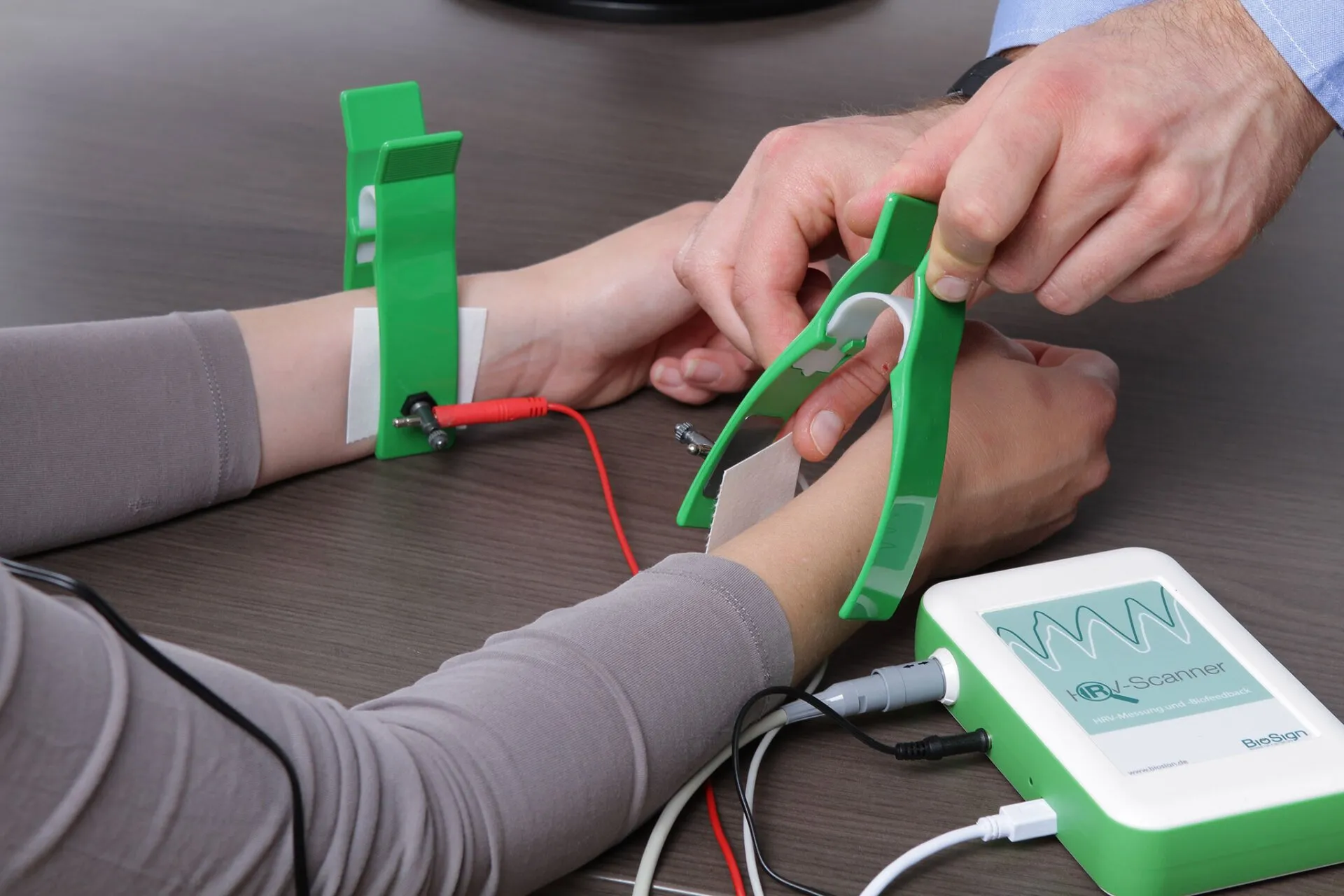
Heart rate variability (HRV) describes the fluctuations in the intervals between successive heartbeats (known as RR intervals).
It is an important measure of the body’s ability to adapt to physical or mental demands.
A high HRV indicates flexibility and a good balance between arousal and recovery, while a low HRV may indicate stress, exhaustion, or health problems.
With the HRV scanner, the ECG is measured using clip-on electrodes on the wrists.
This is particularly convenient, as the test subject does not have to undress. The most accurate HRV measurement is obtained via ECG using chest electrodes.
Compared to wrist measurements or simple heart rate sensors, this method allows for significantly more reliable detection and filtering out of cardiac arrhythmias and interference signals (artifacts).
Artifacts are disturbances or erroneous signals caused by movement, poor electrode contact, or external influences.
If they are not filtered out, they can skew the measurement results.
HRV reflects the interaction between the sympathetic and parasympathetic nervous systems — in simple terms: the “accelerator and brake” of the autonomic nervous system.
Sympathetic nervous system (accelerator): activates the body, increases heart rate and breathing.
Parasympathetic nervous system (brake): promotes regeneration, recovery, and balance.
Short-term changes in HRV, in particular, are controlled by the parasympathetic nervous system.
This means that HRV measurements are primarily a measure of the “braking” mechanism in the nervous system.
RSA measurement is considered the gold standard in HRV analysis.
During the test, the subject breathes for one minute according to a specified rhythm.
This method measures only parasympathetic activity and indicates the current level of the parasympathetic nervous system’s regulatory capacity.
In contrast, a short-term HRV measurement over five minutes provides a snapshot of the current state of the autonomic nervous system.
This assessment evaluates both the sympathetic nervous system (the activating component) and the parasympathetic nervous system (the regenerative component) while the body is at rest.
Combining these two measurements provides a comprehensive picture of autonomic regulation — also known as VNS analysis.
For an even more detailed analysis, HRV monitoring and 24-hour long-term measurements are also available.
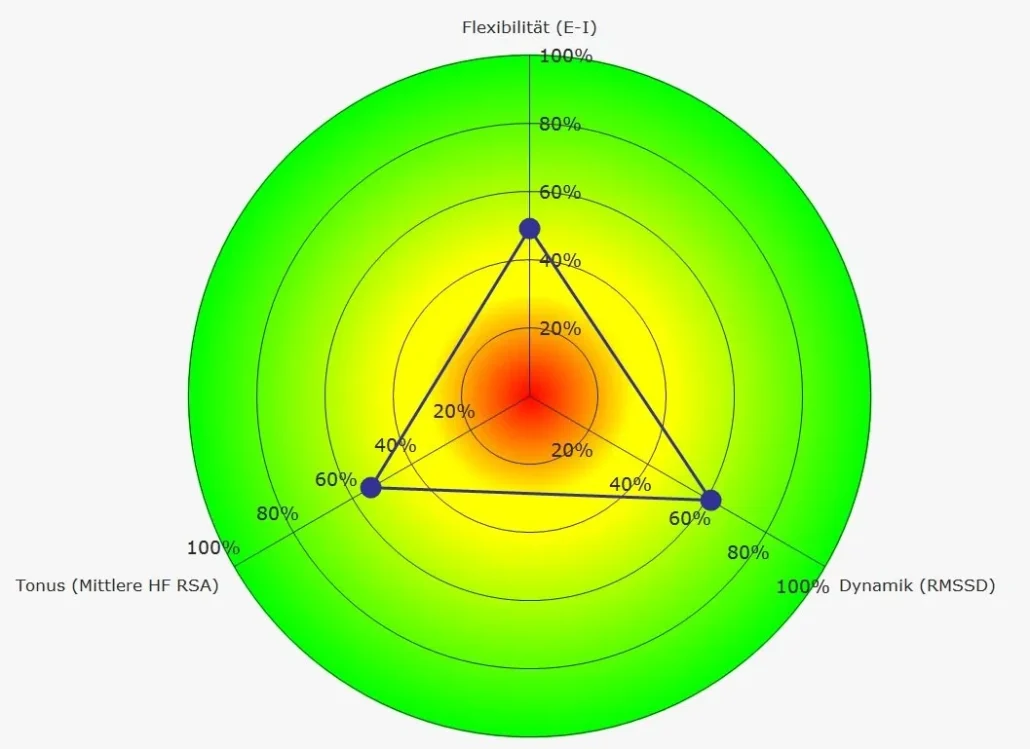
Regular HRV monitoring helps you better understand your current stress and recovery levels and take timely action to address them.
You can find more information on the BioSign website.
Sleep serves not only to restore the body but also to regenerate the brain. During sleep, neural connections are reorganized, memories are consolidated, and emotions are processed. The goal is to prepare the body and mind for peak performance in thinking, feeling, acting, and social interaction.
Healthy sleep occurs in cycles consisting of deep sleep and REM phases. Waking up briefly several times a night is completely normal and usually goes unnoticed. What matters is not just the duration, but your subjective well-being and energy level during the day.
If you’re not getting enough rest while you sleep, it’s worth analyzing the causes. In addition to sleep hygiene, your daily routine also plays a crucial role—because the day shapes the night!
Cortisol levels rise because cortisol is a stress hormone that typically increases in the morning when we wake up and decreases as the day progresses.
Persistently elevated cortisol levels can lead to cardiovascular stress, immune deficiency, impaired cognitive function, and emotional irritability.
In the short term, lack of sleep increases sensitivity to stressors and reduces the ability to cope with stress, creating a vicious cycle: less sleep → more stress → even worse sleep.
A mindful approach to sleep, regular breaks throughout the day, and stress-reduction strategies can help break this cycle and ensure physical and mental recovery.
Micro-breaks are short, regular breaks of 1-3 minutes (maximum 10 minutes) during longer periods of work. They help to relieve the body and mind and are particularly important for people who sit a lot or carry out monotonous activities.
Fewer physical complaints
Studies show that microbreaks can reduce physical discomfort such as muscle tension or back pain.
One particularly effective pattern is:
20 minutes sitting,
8 minutes standing,
Walk for 2 minutes.
Just 2 minutes of exercise after 30 minutes of sitting can bring noticeable relief.
Mental recovery
Micro-breaks do not completely prevent stress and fatigue, but people who take them regularly feel less stressed and exhausted than those who work without breaks.
Influence on productivity
Earlier studies showed a positive effect on productivity. More recent results are mixed:
Micro-breaks do not necessarily increase productivity,
but they do not reduce them either.
In other words: above all, they improve well-being – without compromising work efficiency.
Take a short break of 2-3 minutes every 30 minutes.
Active breaks such as standing up, walking or light exercise are particularly effective.
Planned micro-breaks work better than spontaneous, randomly chosen breaks.
You can also do a mindfulness exercise during your micro-break:

Conclusion: Taking regular microbreaks is a simple, scientifically proven way to reduce physical discomfort, lower stress, and boost well-being —without compromising productivity.
Even just a few minutes of movement can make a big difference!
About the studies:
https://doi.org/10.1371/journal.pone.0272460
You can find more videos here.