Stress does not simply arise “from the outside,” but rather from the interplay of various factors.
Stress is triggered by so-called stressors, such as a heavy workload, feeling overwhelmed, distractions, or social conflicts. These situations interact with our personal patterns of thought and behavior, which can act as stress amplifiers. These include, for example, perfectionism, the desire to please everyone, or a strong need for control.
So how much stress we feel depends not only on the situation itself, but also on how we deal with it and how we assess it.
This is followed by our response to stress: This can manifest itself in the form of emotions, physical reactions (e.g., tension, fatigue), or certain behaviors.
By identifying your personal stressors and stress amplifiers, you can better understand why you feel stressed in certain situations—and work specifically on dealing with them differently.
Raindrops: various stressors flow into the bucket.
The outlet: Represents healthy coping strategies. The better the outlet works, the faster stress can be relieved.
So what are some healthy coping strategies?
Healthy coping strategies help you actively reduce stress and restore balance to your body. They support your body’s recovery system and ensure that your “bucket” empties again.
Organizing thoughts (writing them down, reflecting on them)
Take breaks and consciously unwind
Stress isn’t necessarily a bad thing: In the past, the stress response helped humans react instantly in dangerous situations. The autonomic nervous system controls this shift:
Sympathetic nervous system (stress response): Activates adrenaline and cortisol → Heart rate and breathing increase, muscles tense up, and energy is immediately made available.
Parasympathetic nervous system (rest and digest system): Restores the body’s balance and regulates digestion, regeneration, and relaxation.
The problem today
In the past, the body responded to stress with movement —for example, through the “fight or flight” response. Thus, a threat was usually followed by physical activity, which helped reduce stress hormones and restore the body’s balance.
Today, however, after a stressful situation—such as an argument at the office—we often just stay seated. The stress response isn’t physically resolved; the body remains tense, and stress can thus become chronic.
Why rest is so important
Stress itself isn’t dangerous—it’s the lack of rest that is. If you don’t find ways to relieve stress, you risk chronic tension and health problems. Exercise, relaxation, and intentional breaks help reactivate the parasympathetic nervous system.
Box breathing
The effect of breathing.
Our breathing is much more than just supplying the body with oxygen—it is a direct gateway to our autonomic nervous system. By controlling the way we breathe, we can specifically influence whether our body is operating in stress mode (sympathetic nervous system) or relaxation mode (parasympathetic nervous system).
How breathing works
Rapid, shallow breathing is typical of stress or anxiety. It signals to the body that there is danger—heart rate and blood pressure rise.
Deep, calm breathing Activates the parasympathetic nervous system, calms the heartbeat and the mind, and promotes regeneration and relaxation.
A simple tip: Mindful Breathing
Even just a few minutes of conscious, deep breathing can help relieve tension in the body:
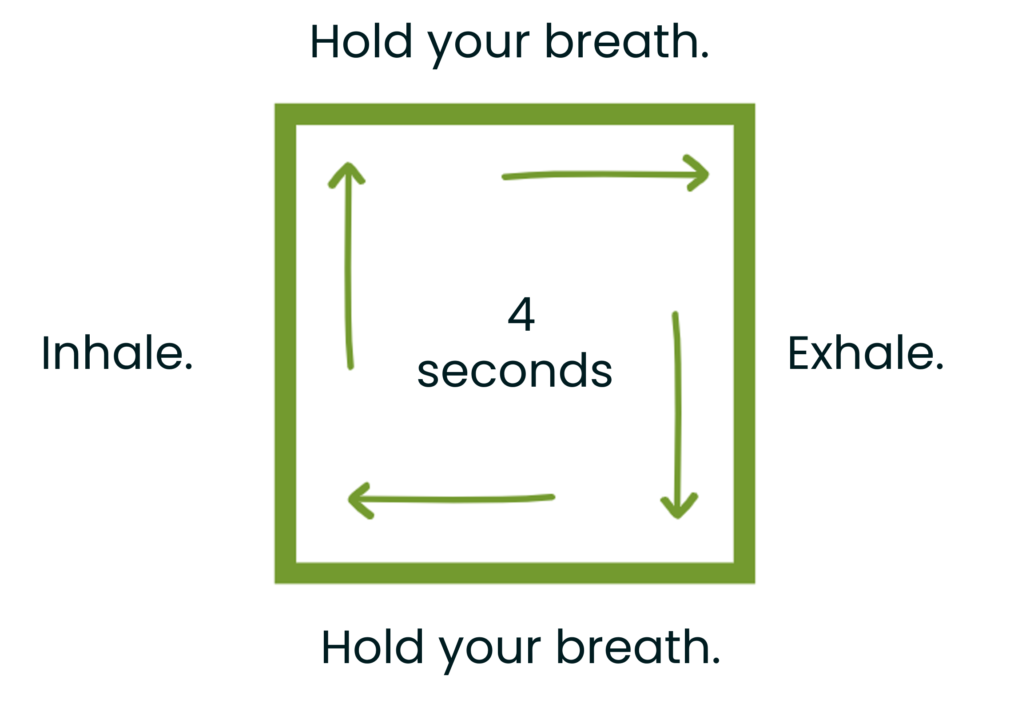
Take a deep breath through your nose for 4 seconds.
Hold your breath for 4 seconds.
Exhale slowly through your mouth for 4 seconds.
Repeat this cycle several times.
This simple breathing technique can lower stress hormones, promote inner calm, and help you activate your parasympathetic nervous system—whether you’re at the office, at home, or on the way.
Box Breathing
Microbreaks
Time for a break!
What are microbreaks?
Microbreaks are short, regular breaks of 1–3 minutes (up to 10 minutes) taken during longer work periods. They help relieve physical and mental strain and are especially important for people who sit a lot or perform repetitive tasks.
Why microbreaks are important:
Fewer physical symptoms
Studies show that microbreaks can reduce physical discomfort such as muscle tension or back pain. One particularly effective pattern is:
20 minutes of sitting,
8 minutes standing,
A 2-minute walk.
Just 2 minutes of movement after 30 minutes of sitting can provide noticeable relief.
Mental relaxation
Microbreaks do not completely prevent stress and fatigue, but people who take them regularly feel less stressed and exhausted than those who work without taking breaks.
Impact on Productivity
Earlier studies showed a positive effect on productivity. More recent findings are mixed:
Microbreaks do not necessarily increase productivity,
But they don’t reduce them either.
In other words, they primarily improve well-being — without compromising work efficiency.
How to make the most of microbreaks
Take a short break of 2–3 minutes every 30 minutes.
Active breaks, such as standing up, walking, or doing light exercise, are particularly effective.
Scheduled microbreaks are more effective than spontaneous, random breaks.
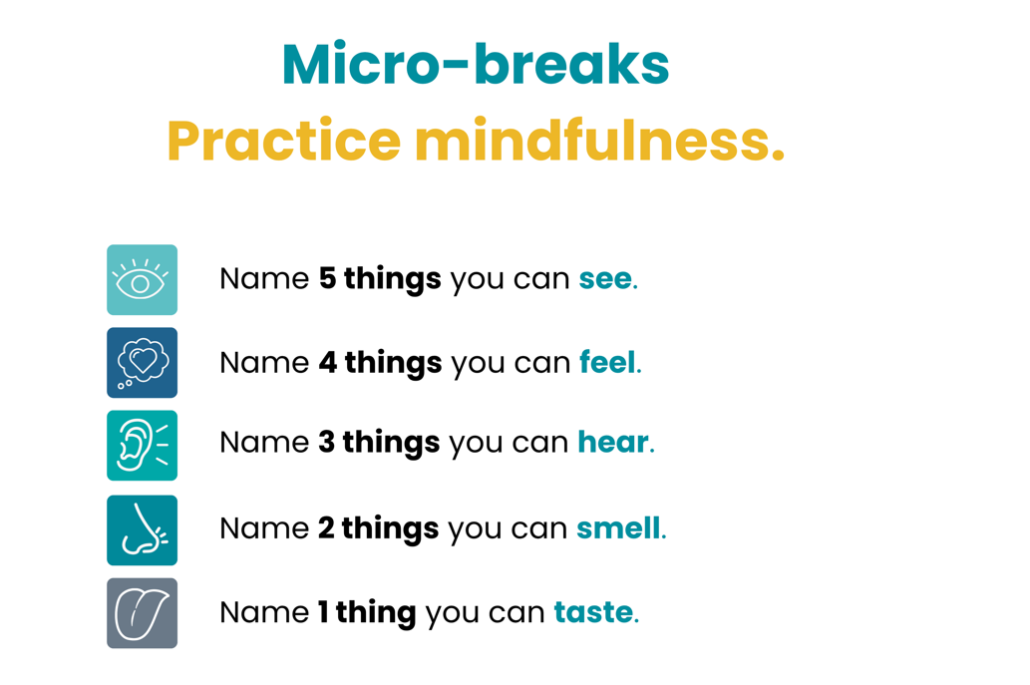
You can also do a mindfulness exercise during your microbreak:
Conclusion: Taking regular microbreaks is a simple, scientifically proven way to reduce physical discomfort, lower stress, and boost well-being —without compromising productivity. Even just a few minutes of movement can make a big difference!