

Sleep is much more than just a period of rest for the body. While we sleep, numerous vital processes take place in the background that support both our physical health and our mental performance. Sleep allows the brain to process experiences, organize information, and strengthen important neural connections. At the same time, it filters out unnecessary stimuli so that our brain can function efficiently.
The body also uses this time to regenerate: cells are repaired, the immune system is strengthened, and energy levels are rebalanced. Through these complex processes, sleep prepares us to think clearly, feel appropriately, act mindfully, and interact well with others the next day. In short: sleep is a fundamental pillar of health, performance, and well-being.
Sleep is especially important for:
Immune System: During sleep, the immune system is activated and strengthened. The body produces important antibodies and can fight off pathogens more effectively.
Memory: New information and experiences are processed during sleep and stored in long-term memory. This helps us learn more effectively and recall information more easily.
Emotions: Sleep helps us process emotional experiences and reduce stress. As a result, we remain more emotionally stable and respond more calmly to everyday challenges.
Keep track of your sleep for a week, both before falling asleep and after waking up.
Tip: Place the protocol right next to your nightstand.
Our sleep is regulated by two key systems: sleep pressure and our hormones.
You can think of the urge to sleep as a bucket that fills with water throughout the day: the longer we stay awake, the fuller the bucket gets, and the greater our need to sleep. By evening, the bucket is ideally full, so we can fall asleep easily. During the night, the bucket empties again.
To ensure that this process works properly, it is also regulated by hormones:
Melatonin (the “sleep hormone”) rises in the evening and makes us feel sleepy.
Cortisol (the “activation hormone”) is high in the morning and helps us wake up.
The two work together:
If your “bucket” is well-filled in the evening and melatonin levels rise, you’ll fall asleep more easily. During the night, the bucket empties, and in the morning, a rise in cortisol ensures that you wake up again.
During the night, melatonin levels are high and cortisol levels are low—these are ideal conditions for restful sleep. In the morning, the ratio is reversed.
For healthy sleep, it’s important that these processes are in balance. Regular bedtimes, exposure to daylight, and a relaxing evening routine support your natural rhythm.
Healthy sleep occurs in cycles consisting of deep sleep and REM phases. Waking up briefly several times a night is completely normal and usually goes unnoticed. What matters is not just the duration, but your subjective well-being and energy level during the day.
No matter what time you go to bed, sleep cycles always follow the same pattern. During the first half of sleep, REM (Rapid Eye Movement) phases—during which rapid eye movements can be observed in the sleeping person—alternate with deep sleep phases. In the second half of the sleep cycle, there are no longer any deep sleep phases.
During the REM phase, the brain is decoupled from the body’s muscles and, among other things, learns new movement patterns. During deep sleep, on the other hand, repair processes take place in the body, and it regenerates itself.
If you’re not getting enough rest while you sleep, it’s worth analyzing the causes. In addition to sleep hygiene, your daily routine also plays a crucial role — because the day shapes the night!
Cortisol levels rise because cortisol is a stress hormone that typically increases in the morning when we wake up and decreases as the day progresses.
Persistently elevated cortisol levels can lead to cardiovascular stress, immune deficiency, impaired cognitive function, and emotional irritability.
In the short term, lack of sleep increases sensitivity to stressors and reduces the ability to cope with stress, creating a vicious cycle: less sleep → more stress → even worse sleep.
A mindful approach to sleep, regular breaks throughout the day, and stress-reduction strategies can help break this cycle and ensure physical and mental recovery.
Sleep is essential for both the body and the mind. When we fall asleep, our body winds down, the brain processes experiences, memories are organized, and stress is relieved. Here are a few simple tips to help this process run smoothly:
Darken the room: Light can disrupt sleep.
Ventilate the bedroom: Fresh air promotes rest.
Develop an evening routine: Calm activities such as reading, taking a walk, or drinking warm beverages signal to your body that it’s time to sleep.
Write down your thoughts: A journal helps clear your mind.
Avoid caffeine and heavy meals: At least 6–8 hours before bedtime.
Stick to a regular sleep schedule: Going to sleep and waking up at the same time supports your natural rhythm.
Short power naps during the day: No more than 20–30 minutes, so as not to disrupt your sleep at night.
Incorporate exercise: Regular physical activity improves sleep quality in the long term.
Reduce screen time: Make sure to choose calming content, especially in the evening.
Progressive muscle relaxation (PMR): Consciously tensing and relaxing muscles to fall asleep more easily.
Practicing mindfulness (MBSR): Helps you manage your thoughts and stress more effectively, even at night.
Reading a book instead of using social media: It’s easier on the brain and makes you sleepy.
Foods that promote sleep: Certain foods can help you fall asleep.
Microbreaks: short, regular breaks throughout the day.
Tip: It’s normal to wake up at night. If you can’t fall back asleep right away, get up, do something relaxing, and lie back down as soon as you start to feel sleepy again.
Microbreaks are short, regular breaks of 1-3 minutes (maximum 10 minutes) during longer periods of work. They help to relieve the body and mind and are particularly important for people who sit a lot or carry out monotonous activities.
Fewer physical complaints
Studies show that microbreaks can reduce physical discomfort such as muscle tension or back pain.
One particularly effective pattern is:
20 minutes sitting,
8 minutes standing,
Walk for 2 minutes.
Just 2 minutes of exercise after 30 minutes of sitting can bring noticeable relief.
Mental recovery
Microbreaks do not completely prevent stress and fatigue, but people who take them regularly feel less stressed and exhausted than those who work without breaks.
Influence on productivity
Earlier studies showed a positive effect on productivity. More recent results are mixed:
Microbreaks do not necessarily increase productivity,
but they do not reduce it either.
In other words: above all, they improve well-being – without compromising work efficiency.
Take a short break of 2-3 minutes every 30 minutes.
Active breaks such as standing up, walking or light exercise are particularly effective.
Planned microbreaks work better than spontaneous, randomly chosen breaks.
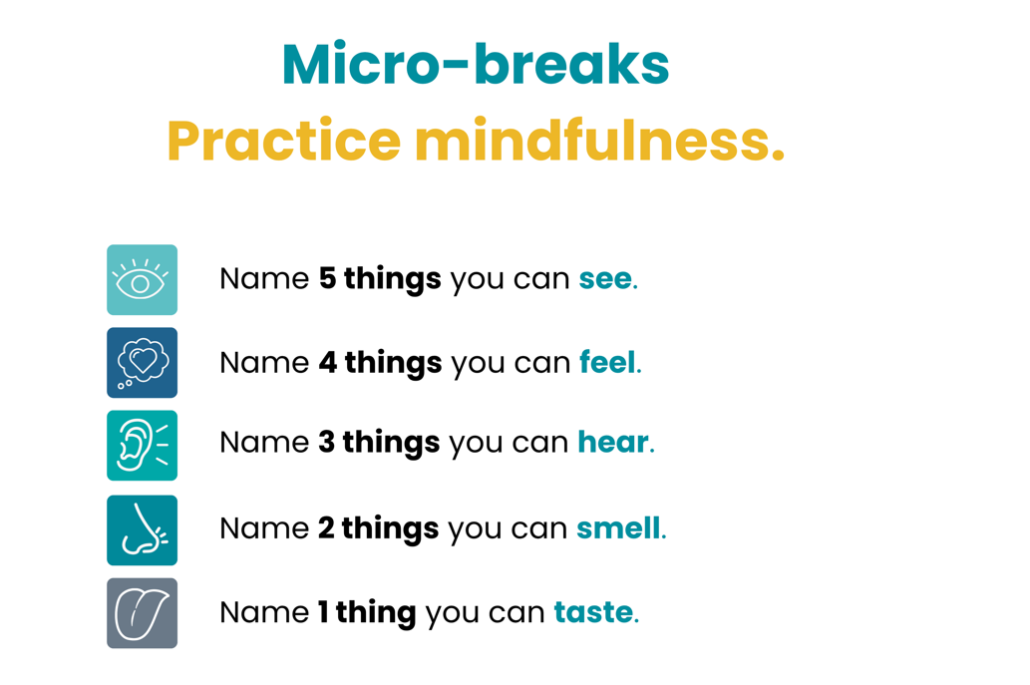
You can also do a mindfulness exercise during your micropause:
You can find more videos here.